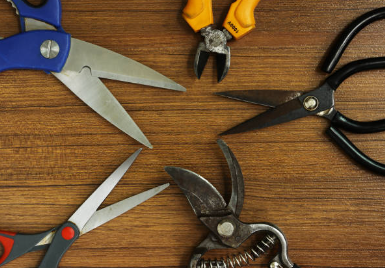
How to choose suitable garden scissors?
In the maintenance of flowers and trees, there is often a saying: “Seven parts rely on management, three parts rely on pruning”, which means that in addition to basic management such as watering, fertilizing, weeding, and pest control, pruning work is also crucial. Reasonable pruning can not only remove disorderly parts such as diseased and diseased branches, dead branches, etc., but also help plants maintain a healthy growth form, enhance light exposure, and promote flower bud growth. Pruning is an essential part of horticultural work in gardens, orchards, or green belts, and completing these pruning tasks requires a suitable pair of garden scissors.
There are many types of garden scissors, each with its own unique design and function. Below, we will introduce several common garden scissors in detail to help you choose the most suitable tool and improve gardening pruning efficiency.
1. High branch scissors
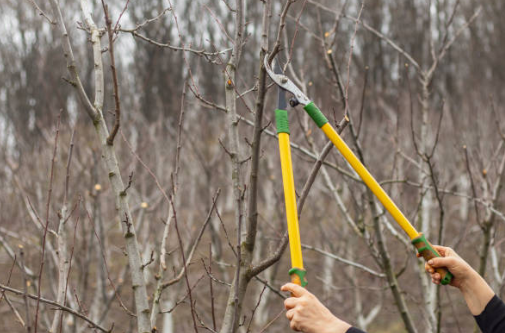
Design features: High branch shears are usually equipped with long handles or extendable rods, and some models have ratchet devices to reduce the user’s operating pressure. The blade is generally hooked or serrated, sharp and sturdy.
Applicable scenarios: Designed specifically for trimming high branches, especially suitable for the top branches of fruit trees, roadside trees, and tall shrubs. Avoid climbing ladders and use tall pruning shears to ensure safety, suitable for daily maintenance in family gardens or orchards.
2. Fence scissors
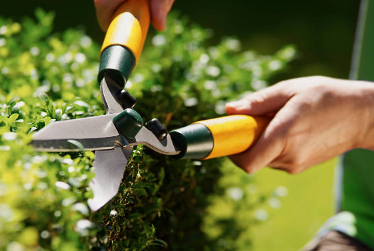
Design features: The blade is long and flat, often with a double-edged or single blade design, and the handle is longer to provide greater leverage, suitable for long-term use.
Applicable scenarios: Used for trimming the edges of fences, green hedges, or shrubs, it can quickly create neat geometric shapes such as squares, spheres, etc. Very suitable for horticultural landscape design, maintaining the cleanliness and beauty of green belts.
3. Pruning scissors
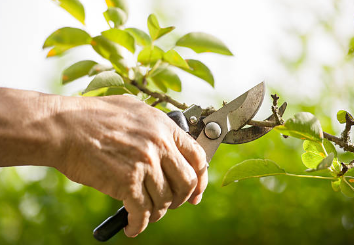
Design features: The pruning shears have a compact size, comfortable handle, and different types of blades such as straight, curved, or eagle beak blades. Some models also come with spring assistance, making operation easier.
Applicable scenarios: Suitable for trimming the fine branches and tender leaves of shrubs and fruit trees, promoting plant growth and ventilation. The curved blade design is suitable for trimming close to the roots, while the straight blade is easy to cut straight, making it one of the most commonly used tools in home gardening.
4. Flower cutting scissors: a sharp tool for finely trimming flowers
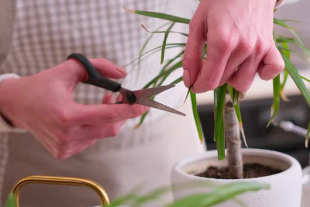
Design features: The cutting blades of the flower clipper are slender and sharp, the handle is lightweight, and some parts are designed with bends for easy use in places where angles are difficult to operate.
Applicable scenarios: Used for trimming flowers, potted plants, or floral works, accurately cutting flower stems without damaging the flowers. The elbow design is particularly suitable for operating in narrow spaces and is an essential tool for flower shops or gardening enthusiasts.
Garden scissors play a very important role in gardening work. Whether it’s pruning tall branches, shaping hedgerows, or finely trimming flowers and fruits, each type of scissors has different functions and uses. Choosing the appropriate tools according to one’s gardening needs can not only improve work efficiency, but also ensure the healthy growth of plants.
I hope this blog can help you understand different types of garden scissors, choose the most suitable tool for you, and make your garden, orchard, or green belt more beautiful and tidy!
