
Capturing Every Drop of Rain: A Complete Guide to Rainwater Harvesting Systems, From Design to DIY Installation
Are you tired of watching your water bills rise while worrying about your garden withering during the dry season? The answer lies on your roof. A rainwater harvesting system is the most cost-effective and environmentally friendly practice in water-efficient gardening.
Not only is rainwater free, but unlike treated tap water, it’s free of chlorine and other chemicals, making it a natural tonic for your plants. This article will provide a complete guide on how to design, calculate, and install an efficient rainwater barrel system like a pro, bringing you one step closer to your sustainable gardening goals .
Design Principles: The Three Core Components of a Stormwater System and Their Functions
Before you even pick up the tools, you need to understand how your rainwater harvesting system works. There are three key parts to a system that work together to ensure clean, efficient water circulation.
Water collection surface, transportation and storage: the three links of the water cycle
Catchment Surface: Your roof is your primary catchment area. You need to know its size, as it’s key to calculating your potential rainfall. Roof tiles are cleaner than asphalt, but any roof will work.
Conveyance System: This is the path that carries water from your roof to your rainwater collection tank. Filtration is key ! Installing a fine-mesh filter or diverter on your downspout is key to preventing leaves, debris, and large particles from entering your rainwater collection tank . Remember, you want water, not slurry.
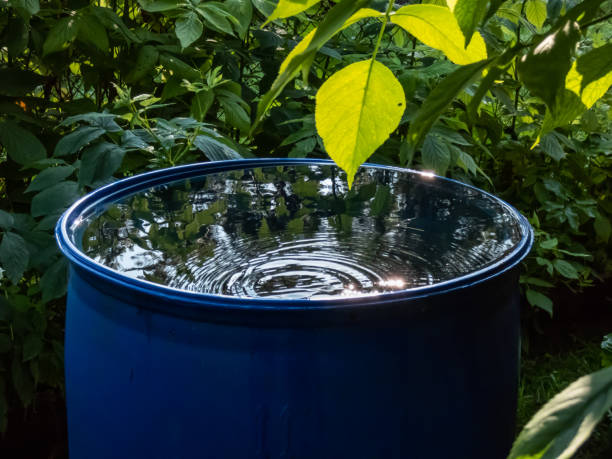
Storage: This is a rainwater collection barrel or tank. Capacity is key. Choose the right size based on the size of your garden and local rainfall patterns.
Real-World Calculations: How Much Water Storage Capacity Do You Need?
Installing collection barrels blindly can lead to wasteful overflows or insufficient reserves during droughts when they are most needed. Accurate stormwater system design requires a little math.
Doing the math, you’ll find that a 1-inch rainfall can collect about 620 gallons of water on a 1,000-square-foot roof! Compare this number to your estimated weekly water needs based on your plants’ water requirements to develop a sound gardening plan .
DIY Installation Guide: Make Your Rainwater Barrel Stand Up
Rainwater barrel installation is a perfect DIY gardening project that can usually be completed in a day.
Keeping you safe and healthy: basics and mosquito control
Solid Foundation: Remember, a 55-gallon collection drum weighs 450 pounds when filled with water! It must be placed on a completely level and solid brick or cement pad. Safety first.
Downspout diverter installation: This is the “on/off” of the system. Install a diverter (usually a T or Y fitting) to ensure that only clean water is diverted into the bucket and to redirect the water back to the original downspout during the rainy season or when the tank is full.
Preventing mosquito breeding and overflows: This is key to your health! Make sure all openings and overflows in the top of the bucket are covered with a fine metal or nylon mesh . Also, an overflow must be designed to safely direct excess water to the garden drain area.
Tap connection: Install a brass faucet (Spigot) at the bottom of the collection bucket. This is the outlet for your water and the starting point for connecting to the irrigation system.
System integration: a closed loop of “high water efficiency” from collection to irrigation
The whole value of rainwater harvesting lies in its seamless integration with your irrigation system.
The golden combination of rainwater collection and drip irrigation system
Maximize water efficiency: Traditional sprinklers lose a lot of water to evaporation. The drip irrigation system , on the other hand , uses tiny pipes and emitters to accurately and slowly deliver water collected from rainwater to the roots of plants.
Keyword Highlights: Incorporating a drip irrigation system is the gold standard for efficient , water-efficient , and sustainable gardening . This low-pressure system is perfectly suited to gravity-fed rainwater collection barrels.
Summary and Call to Action: Take Control of Your Water
rainwater harvesting system not only saves you a lot of money on your water bill, but also allows you to make a positive contribution to local water management . It allows you to move from being a utility-dependent consumer to a self-sufficient, environmentally responsible gardener.
Start your rainwater barrel installation project today! Investing in your roof is investing in a greener, more economical, and healthier garden.
Do your local regulations allow for rainwater barrel installation? Share your local experiences and DIY challenges in the comments!
