
Gardening Gloves Material Guide: Find the Perfect Pair for You
When you’re turning the soil, pruning, or sowing seeds in the garden, your hands are almost the part of your body that comes into closest contact with nature. A good pair of gardening gloves can not only protect your hands from cuts, scratches, or chemicals, but also make the work easier, cleaner, and more enjoyable.
This article will take you through a comprehensive understanding of gardening glove materials from four perspectives:
Why pay attention to glove materials,
analysis of the advantages and disadvantages of common materials
, how to choose the right material for the task,
and selection and maintenance techniques.
It can also increase your understanding of the materials of items , so that you can have a higher level of thinking when making choices in the future.
Why should we pay attention to the material of garden gloves?
Many gardening novices often only look at the style or price when choosing gloves, but what really determines comfort and protection is the material .
As The Celtic Farm ‘s gardening consultant says, “Good gardening gloves not only protect your hands, but also allow you to grip more firmly and dry faster.”
In gardening, our hands come into contact with soil, fertilizer, thorny plants, and even pesticides. Gloves must be able to:
Prevent punctures, cuts, and bacterial infections
Maintain good grip and dexterity
Provides moderate breathability and durability
Gloves made of different materials differ significantly in these characteristics. Next, we will break down their features one by one.
II. Analysis of Common Materials for Gardening Gloves
Cotton/fabric gloves
These gloves are typically made of pure cotton or blended fabrics, making them lightweight, soft, and highly breathable.
They are a great companion for light gardening tasks such as sowing, loosening soil, or transplanting seedlings.
Advantages: Comfortable and breathable, not stuffy in summer.
Disadvantages: Limited thorn and water resistance, not suitable for pruning thorny plants or treating wet soil.
Suitable for warm, dry days, for light work on balconies or flower beds.
Leather gloves
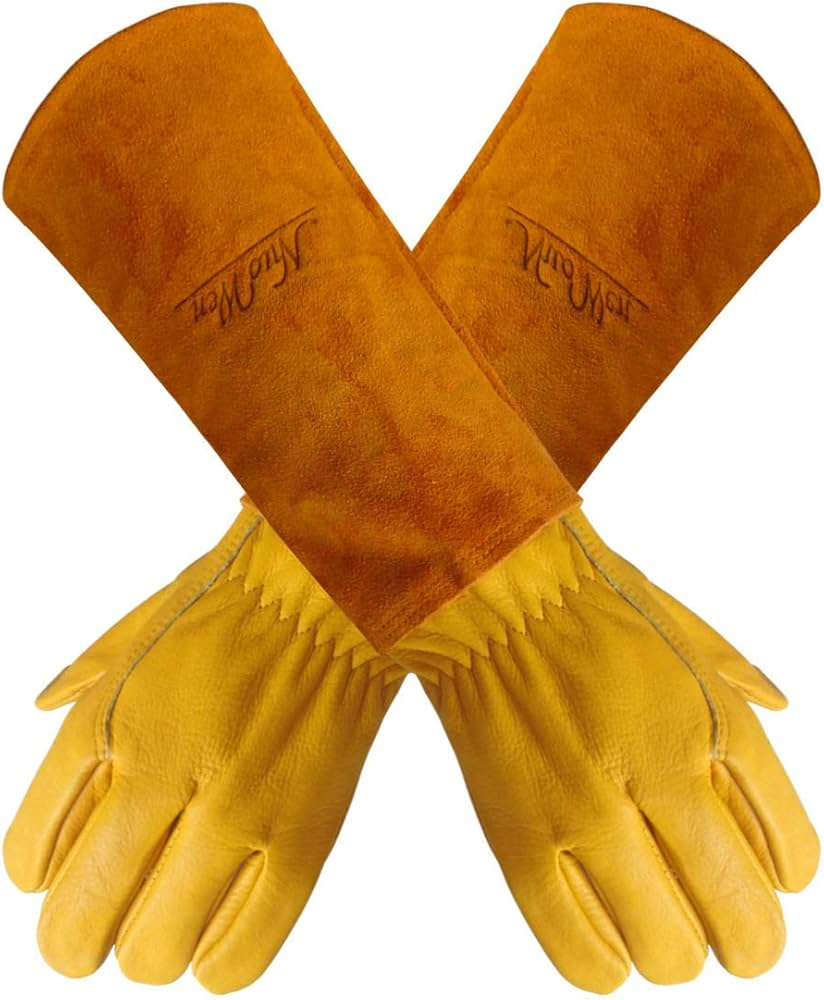
Leather gloves are mostly made of natural materials such as cowhide, goatskin, or deerskin. They are thick and durable, making them the first choice for pruning thorny plants such as roses and blackberries.
Advantages: High puncture resistance and durability, making it ideal for heavy-duty work.
Disadvantages: Poor breathability; it hardens easily when wet; slightly less flexibility.
Tip: If your gloves get wet, let them air dry naturally. Do not heat them directly, otherwise the leather may deform.
Applicable scenarios: Tasks requiring strong protection, such as pruning shrubs, clearing dead branches, or installing supports.
Rubber/latex coated gloves
These types of gloves typically have a layer of rubber or latex coated on a fabric or cotton base, giving the palm a waterproof and corrosion-resistant finish.
Advantages: Waterproof, good grip, easy to clean.
Disadvantages: Poor breathability, prone to sweating after prolonged use; latex material may cause allergies.
Applicable scenarios: Cleaning ponds, applying fertilizers or pesticides, weeding on rainy days, and other humid environments.
Nitrile/synthetic coated gloves
Nitrile gloves feature a synthetic rubber coating paired with a nylon or knitted base, offering a balance of water resistance, flexibility, and grip.
This is an ideal alternative for those with latex allergies.
Advantages: Waterproof, oil-proof, soft and flexible, suitable for delicate gardening operations.
Disadvantages: Although it can resist general abrasion, it is not suitable for long-term handling of thorny or sharp objects.
Applicable scenarios: general gardening tasks, transplanting, pruning, or container planting, etc.
Mixed/composite material gloves
If you’re looking for “one pair of gloves to solve all your problems,” then hybrid gloves are worth considering.
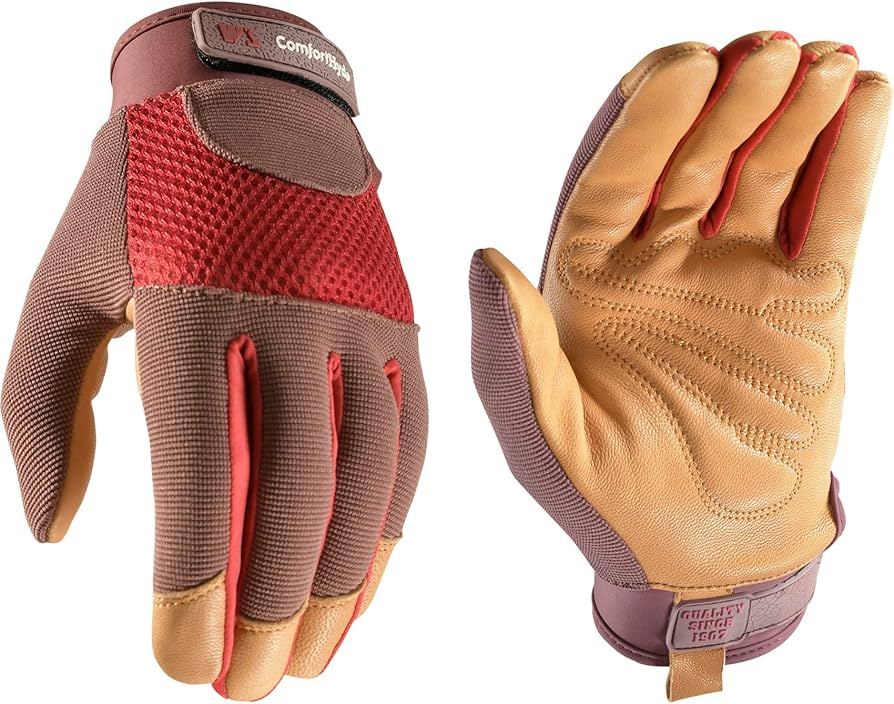
They typically combine different materials, such as a leather palm with a cotton back, or a nitrile coating with a fabric underlayer.
Advantages: Offers a balance of breathability, protection, and flexibility.
Disadvantages: Still not as durable as dedicated gloves for extreme tasks (such as deep pruning or heavy gardening).
Suitable for: Multipurpose home gardening, a general choice for light to moderate workloads.
III. Selecting Materials Based on the Task: How to Match “Purpose” with “Gloves”
Different tasks require different gloves. Here is a simple comparison table:
| Gardening task types | Recommended materials | Reasons for choosing |
| Sowing/Transplanting/Weeding | Cotton, Nitrile | Lightweight, flexible, and breathable |
| Working in humid environments or with chemicals | Rubber, Nitrile | Waterproof, corrosion resistant, and easy to clean |
| Pruning of thorny plants / Heavy work | leather | Puncture-resistant and wear-resistant, providing the strongest protection. |
| Want to handle multiple tasks with one pair of shoes? | Mixed materials | Balanced overall performance |
Tip:
No single pair of gloves can do everything. If you frequently handle different tasks, consider preparing two or three pairs to use in combination for different purposes.
IV. Selection and Maintenance Recommendations
When choosing, please pay attention to the following points:
Size fit : Gloves that are too tight will compress the fingers, while gloves that are too loose will affect grip.
Stitching quality : Gloves with rough internal stitching are prone to rubbing against the skin.
Material label : Before purchasing, be sure to check whether it is labeled with “nitrile coating” or “goatskin” or similar descriptions.
Choose gloves based on the task at hand, not just the price : cheap gloves are more likely to be damaged if they are not suitable for the task.
Maintenance methods
Cotton/fabric gloves : Machine washable or hand washable, air dry and store in a dry place.
Leather gloves : Clean dirt with a soft brush and occasionally apply a small amount of conditioning oil (such as linseed oil).
Rubber or nitrile gloves : Wash with warm water and a neutral detergent. Avoid strong chemicals or high-temperature drying.
dry it thoroughly before storing to prevent mold or deformation.
V. Conclusion: Find your “feel” for your garden
The joy of gardening lies in the interaction between your hands and the soil. And a suitable pair of gardening gloves can make this contact safer and more comfortable.
Leather’s sturdiness and puncture-proof safety; nitrile’s flexibility and waterproof lightness; cotton’s breathability and comfortable natural feel—different materials represent different gardening styles.
Hopefully, this “Gardening Gloves Material Guide” will help you find the perfect pair, making every planting, pruning, or weeding experience a pleasant one.
